The Pininfarina wind tunnel in Italy is not a place where small programmes make bold claims. When Tõnis Väli — a student running aerodynamic simulations on a laptop — told the engineers there that he believed they would break their highest-ever downforce record that day, he said it calmly. He believed it because the numbers said so. They ran the test. He was right.
That moment is where this story starts.
What CFD Actually Is
CFD stands for Computational Fluid Dynamics. Engineers build a digital model of a car and simulate air moving around it — every gust, every swirl, every pocket of pressure — as if the car were already on track.
The simulation shows where the car generates downforce, where it loses energy to drag, and where airflow breaks apart and causes problems. Change the shape of a wing or a floor panel, run it again, and you have new answers within hours. No physical parts. No wasted material.
It is the closest thing motorsport engineering has to a test drive before anything is built.
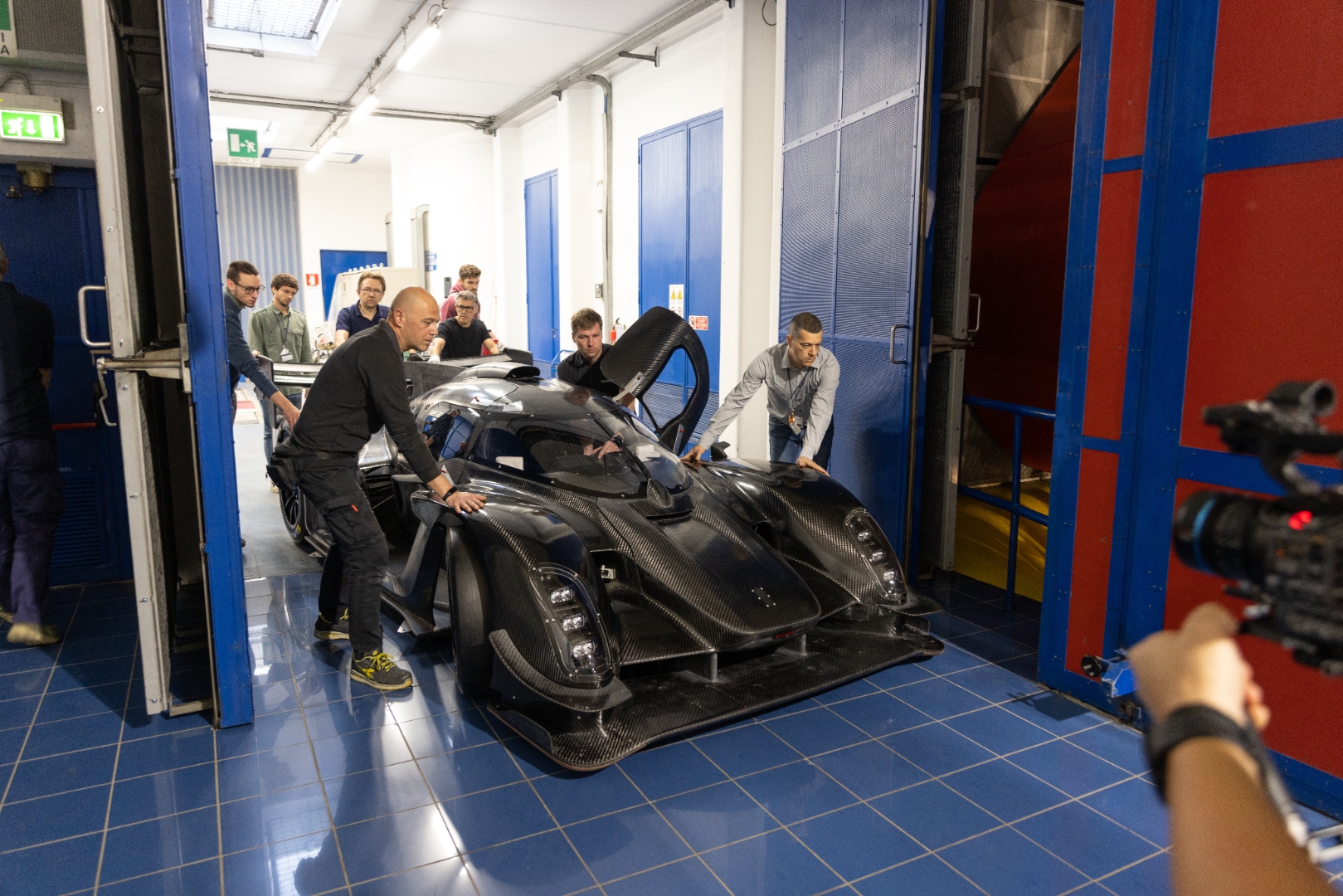
The Kalana entering the Pininfarina wind tunnel, Turin. The moment the CFD results would be tested against reality.
The Kalana — and the Student With a Laptop
On 3 November 2016, a simulation log was opened for the first time. The title of the first entry was “Esimene simulatsioon” — Estonian for “First simulation.”
The person who opened that log was Tõnis Väli, a freelancer hired through a job posting. When he started, he was still in Formula Student — university-level motorsport engineering, not yet a professional career. He ran his simulations on a standard laptop.
Over seven years, he ran 602 of them.
The results were not taken on faith. They were later validated against real wind tunnel data — checked against physical measurements to confirm the simulations matched reality. They did. Which is how Tõnis ended up in that wind tunnel at Pininfarina, standing across from engineers who had worked with some of the most aerodynamically developed cars in the world.
He asked them what the highest downforce figure ever recorded at that tunnel was. They told him. He said he believed they would break it today.
They did.
One person. One laptop. 602 simulations. And a result that had to be taken seriously by people who had seen everything.
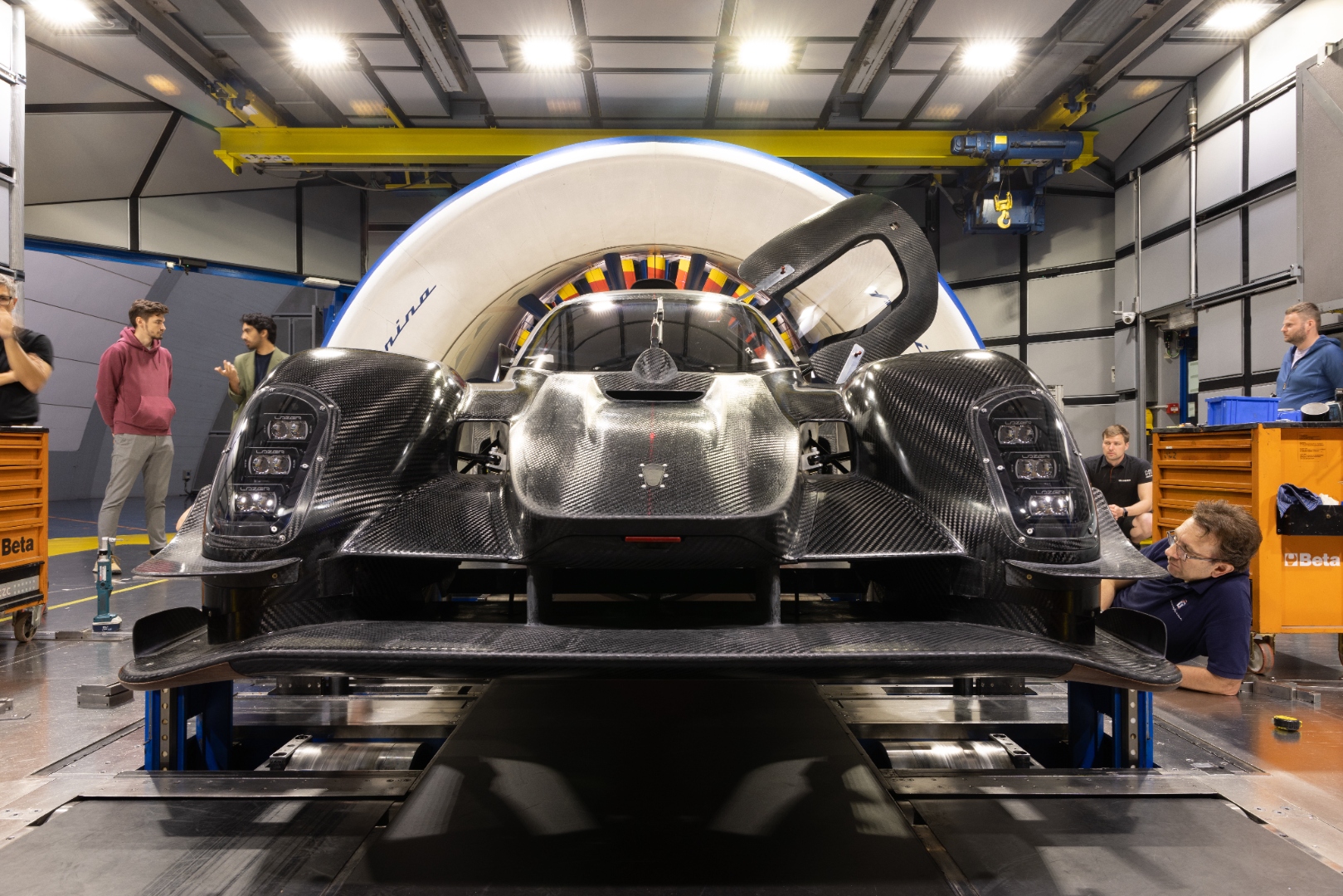
The Kalana on the rolling road at Pininfarina. 602 runs on a laptop about to be confirmed by wind tunnel measurement.
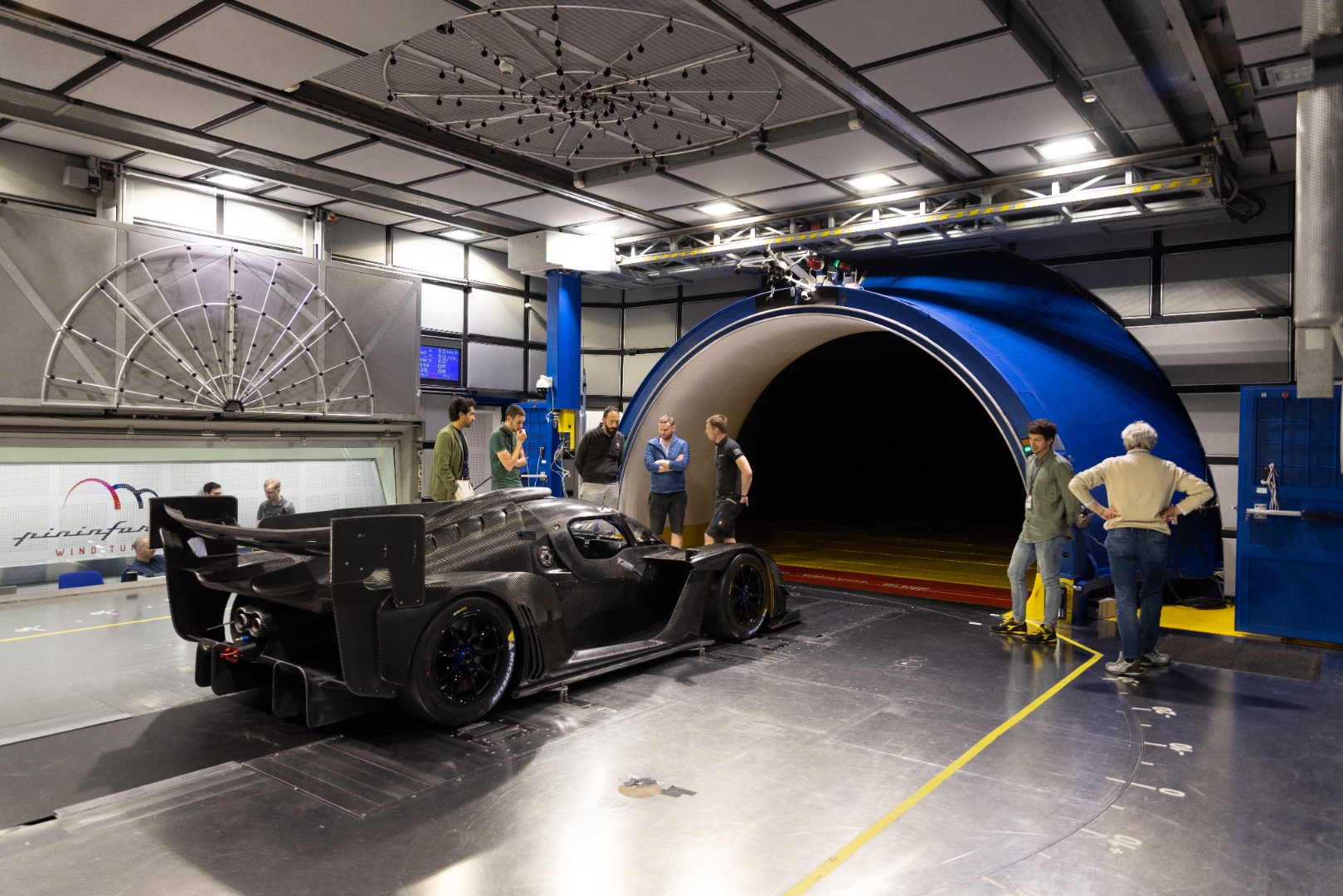
The Pininfarina Wind Tunnel control room. The record was broken here.
What That Result Opened Up
A project on paper is one conversation. A real car with a documented result at a facility like Pininfarina is a different one entirely.
Building the Kalana, and breaking that record, changed who was willing to work with Oldbac. The Tahkuna CFD team is not what most people would expect from a programme of this size.
Six engineers. Globally distributed. They collaborate over video calls across time zones. Five of them carry careers spanning Red Bull Racing, Haas F1 Team, Williams Racing, Audi’s Formula 1 programme, Porsche Motorsport, and GM Motorsport. Names are withheld pending permission from the engineers and their employers.
The sixth is Hardi Hakk. Estonian. A student at the Estonian Aviation Academy, studying aerospace engineering. He leads the Formula Student aerodynamics team in Tallinn and works on the Tahkuna part-time.
None of those five were available when the Kalana was being built. They became available when the Kalana proved the project was worth their time.
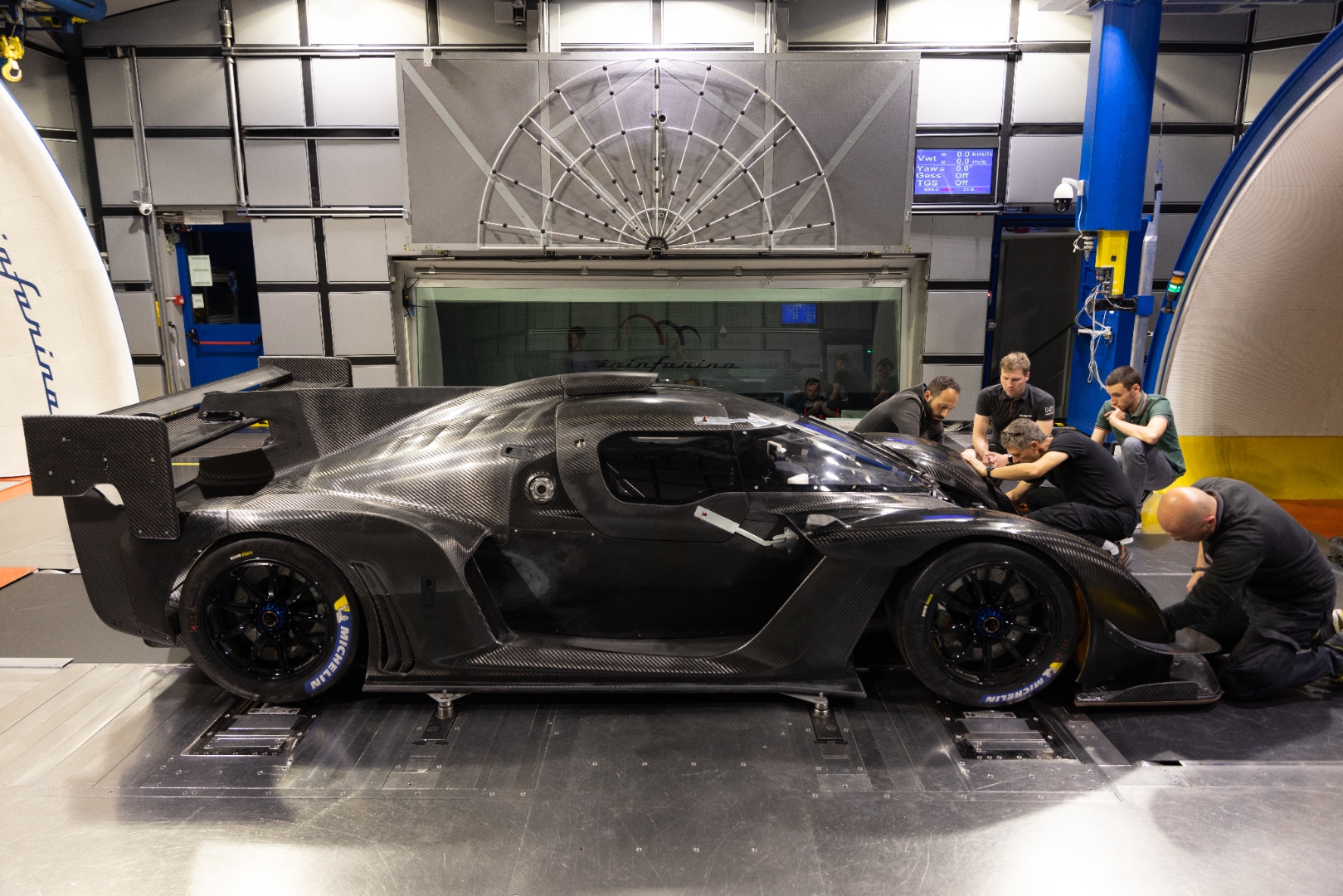
Between runs at Pininfarina. Each configuration change is made by hand — a new wing angle, a revised floor setup — then the tunnel runs again.
LUMI
The Tahkuna simulations do not run on a laptop. They run on LUMI — the most powerful supercomputer in the European Union, located in Finland, accessed through TalTech University.
LUMI fills a building. It consumes roughly as much electricity as a small town. A simulation that would keep a laptop busy for weeks is returned in hours. That speed matters because aerodynamic development is not a single answer — it is a long sequence of questions, and the faster each one can be answered, the more ground can be covered before the first physical part is made.
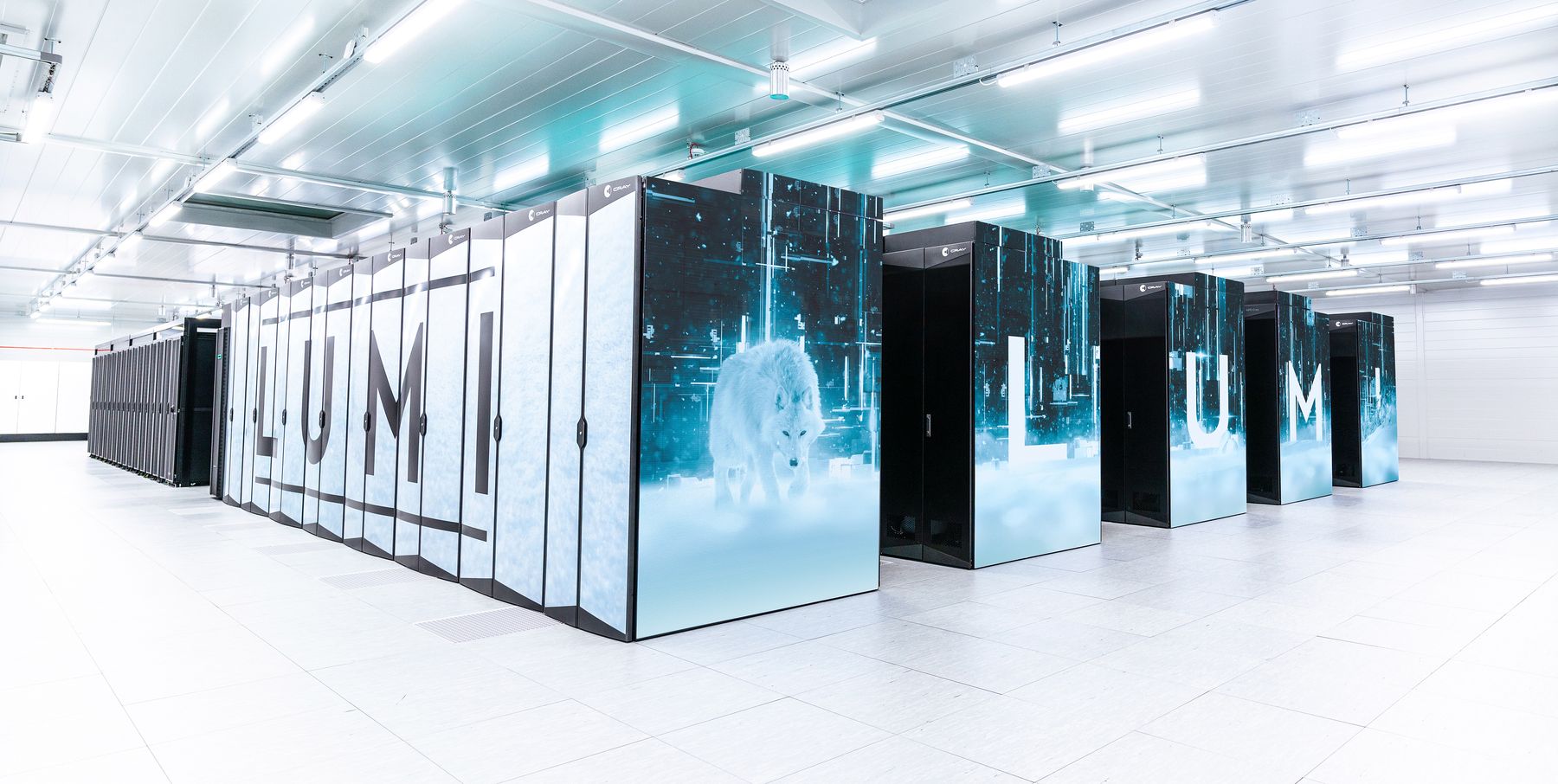
LUMI — the most powerful supercomputer in the European Union. CSC data centre, Kajaani, Finland. Image: Fade Creative / CSC.
What 245 Means
As of April 2026, 245 separate configurations of the Tahkuna have been run. More will follow. Each one is a different version of the car’s shape — a different wing angle, a different floor profile, a different duct geometry — tested virtually, compared, and either developed further or set aside.
Each configuration is not a single simulation. Every version of the car is tested at up to three points: low speed for tight hairpins, high speed for the open sections, and a primary development condition at 270 km/h at sea level. A shape that works at high speed may behave differently at 80 km/h. Both matter on a road that changes character every few hundred metres. Across all 245 configurations, the log records 467 individual simulation runs.
Most people do not think about the number of decisions that sit between the first sketch of a car and finished bodywork. Every surface that touches airflow affects everything else. 467 runs means the team has already answered most of those questions before a single piece of carbon fibre is cut.
That is not typical at this level of motorsport. It is the kind of programme you expect from operations with far larger budgets.
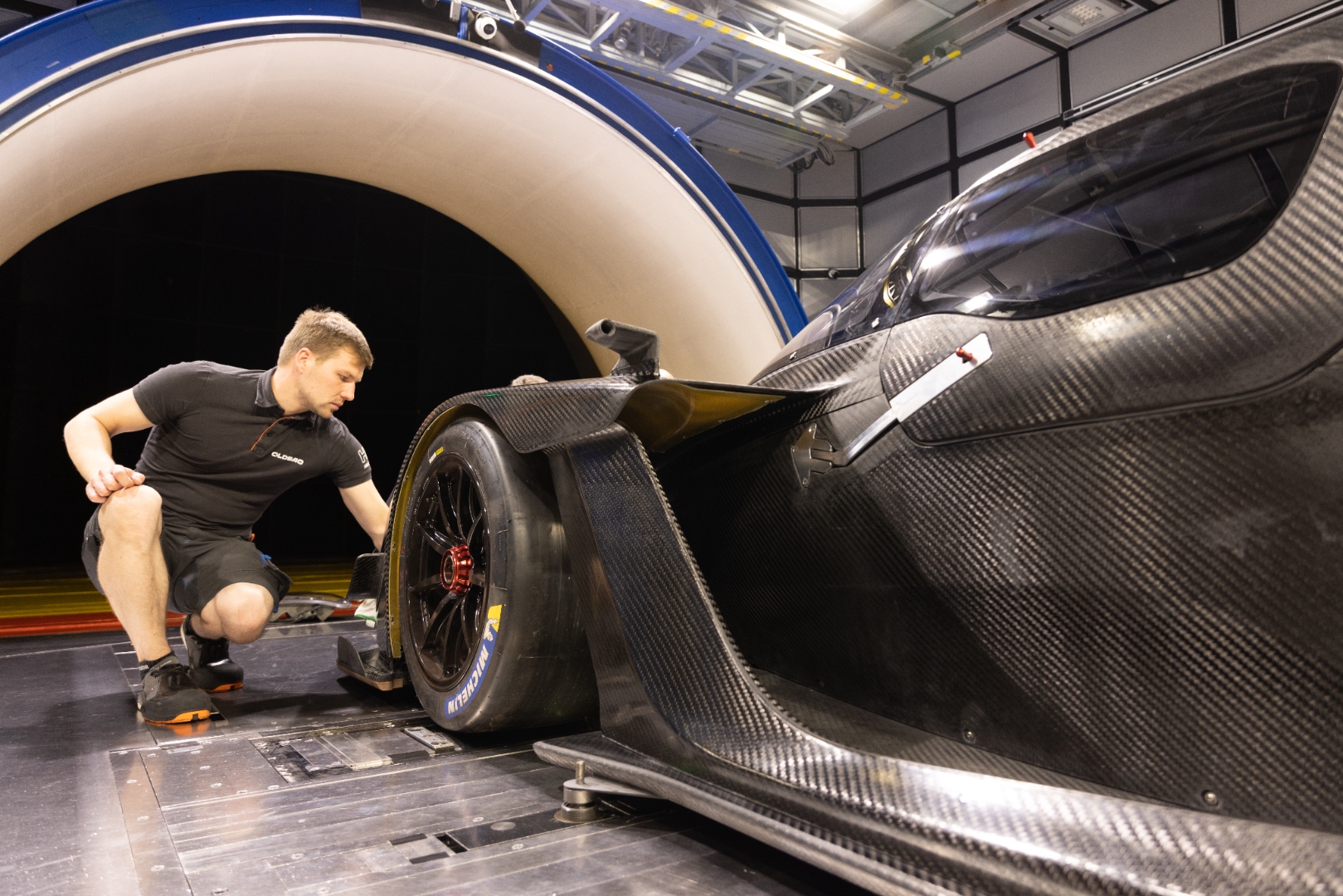
Studying the rear geometry between runs. What the simulation predicts and what the tunnel measures — closing that gap is the work.
The Car Does Not Exist Yet
The Tahkuna’s body panels have not been laid in carbon. Its aerodynamic package has not been bolted to a chassis. But its aerodynamics have already been through 245 iterations, run on hardware that processes more data per second than most racing programmes ever touch, guided by engineers whose working lives are spent at the front of the grid.
When the simulation work concludes, the body geometry will be remodelled into a clean production surface and put through a final round of simulations — a confirmation that nothing was lost in the translation from development model to manufactured shape. If it passes, body engineering begins. Carbon fibre after that.
It began with a student, a laptop, and an entry titled “Esimene simulatsioon.”
What comes next will speak for itself.