← All Stories
Bikernieki Circuit, Riga — 17 June 2024
1:12.725
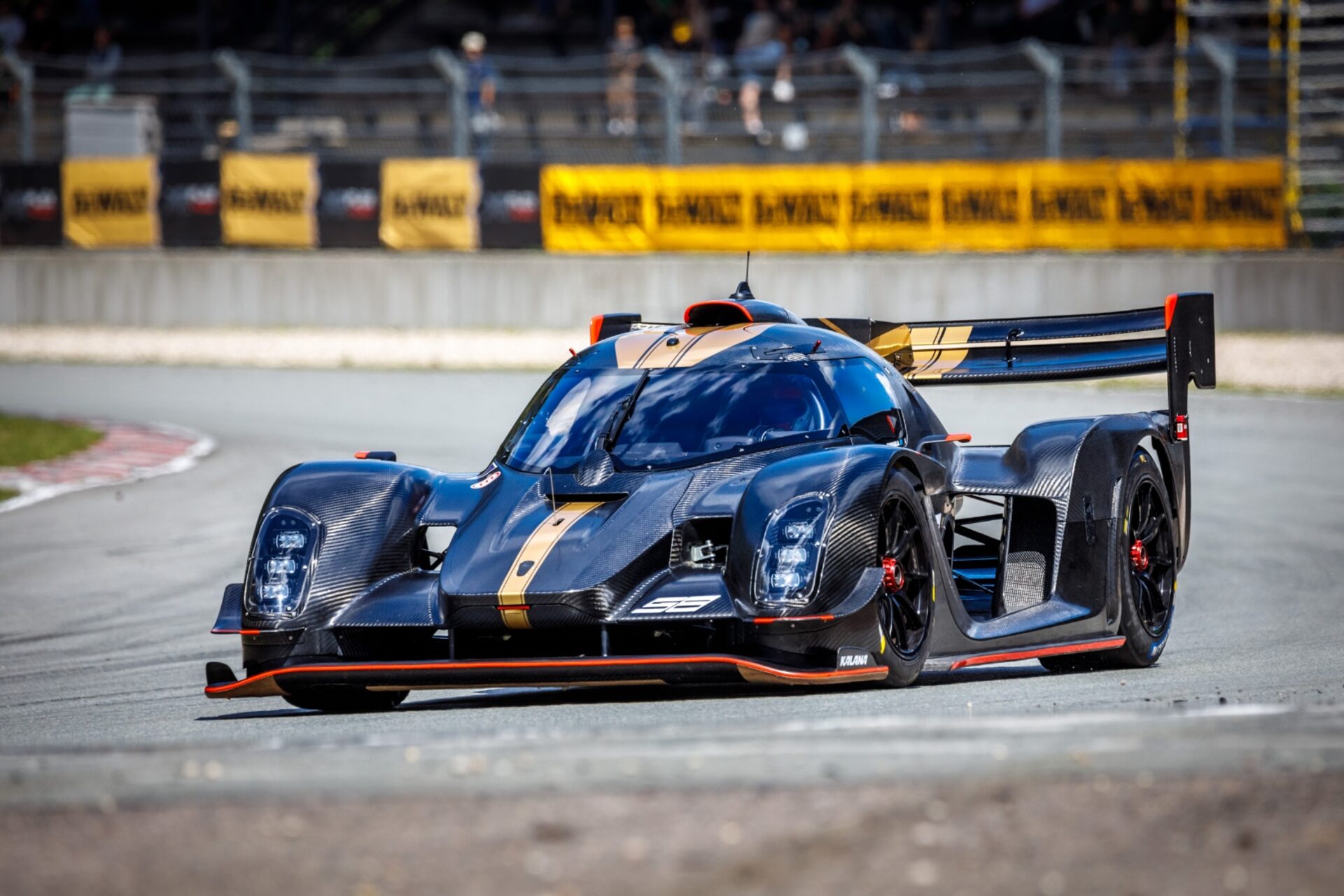
The Bikernieki track record. Set with a steering system that tried to fight us on the fastest corner of the lap.
We were not racing at Bikernieki. We were invited as special guests for a single purpose: attempt the circuit lap record. The window was narrow. A few trial runs, then the timed attempt. No second chances, no coming back the next day.
Preparation started in the simulator. We built a model of Bikernieki using a track scan made by enthusiasts and available online. The model turned out to be surprisingly accurate. In the simulator we were, as usual, faster than what the real car would deliver. But the margins and the approach translated. We knew where the time was and where the risks were.
Steer-Bump
The Kalana runs a steering geometry we call Steer-Bump. In a conventional car, the steering arm is mounted on the lower wishbone. We mount it on the steering hub itself. This means the front camber angle changes with steering input — not just with suspension travel. The effect is significant: in slow corners, where the inside wheel unloads and loses camber, the geometry adds it back through the steering angle. More grip, more mechanical balance, more speed.
The tradeoff is weight at the front wheel. The steering loads are higher, and the electronic power steering has to work harder. On a smooth track, this is not a problem. On a bumpy track, the transient loads spike unpredictably.
Bikernieki is a bumpy track.
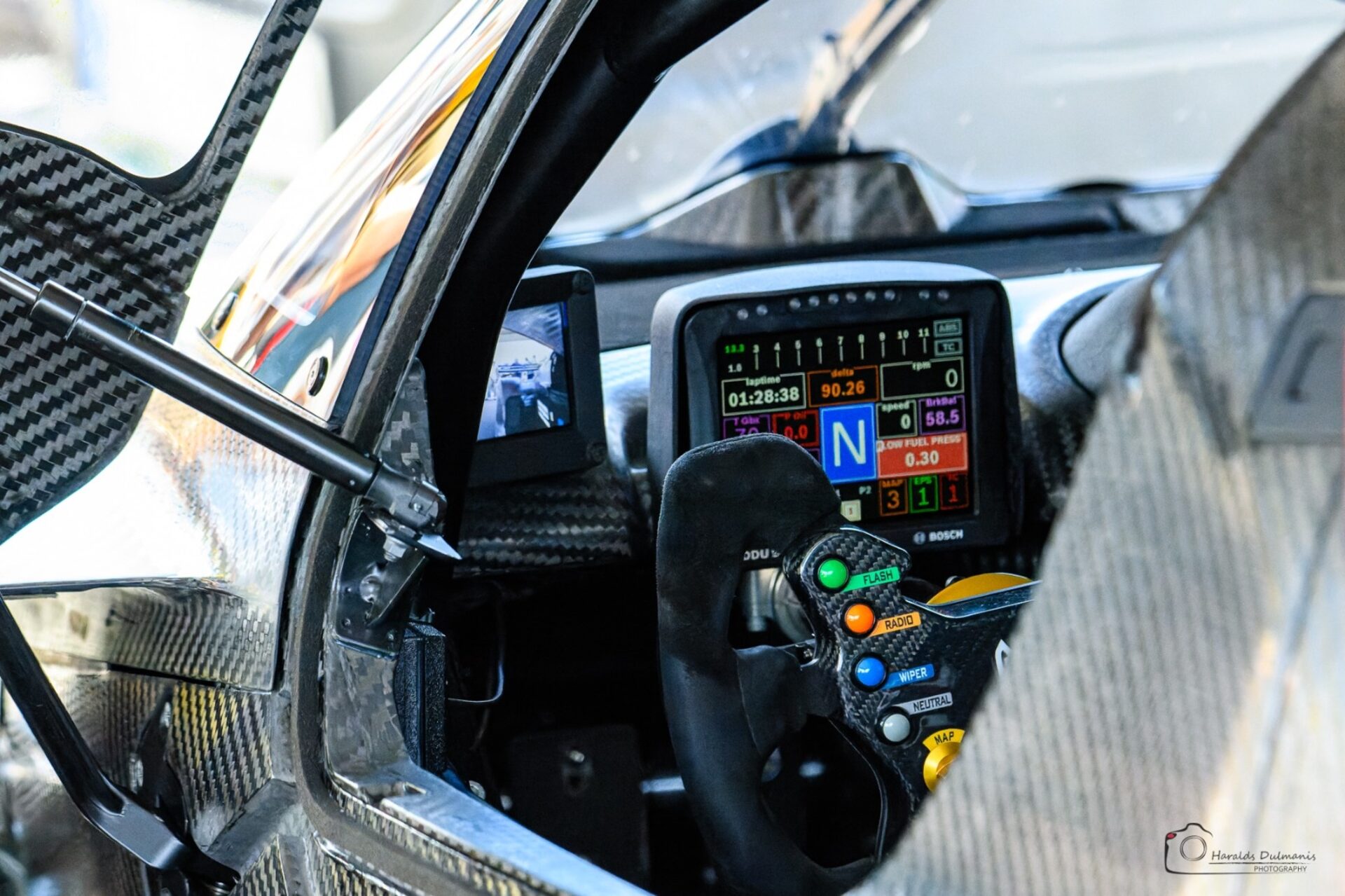
The office. Where you feel the steering go light for a fraction of a second and decide what to do about it.
The Problem
During the trial runs, it happened. A fast right-hand corner — one of the highest-speed sections of the track. The car hit a bumpy patch mid-corner, the transient load through the steering column spiked, and the electronic power steering cut out. For a fraction of a second.
A fraction of a second is a long time at that speed. Without power assistance, the steering loads through the Steer-Bump geometry are enormous. The wheel becomes impossible to hold. The car drifted off its line. It did not crash. But it was close enough to concentrate the mind.
There was no time to diagnose and fix the issue before the record attempt. The power steering protection was doing exactly what it was designed to do — cutting torque to protect itself from an overload. The only fix would have required recalibrating the protection thresholds or redesigning the load path, neither of which was happening in a paddock in Riga with an hour before the timed run.
The Attempt
The approach was simple. Drive the lap at full commitment everywhere except that one corner. Carry slightly less speed through the bumpy section. Keep the loads below the threshold. Accept the time loss there and make it up everywhere else.
It was enough.
1:12.725. The new Bikernieki Circuit track record.
Full onboard lap. Raw sound.
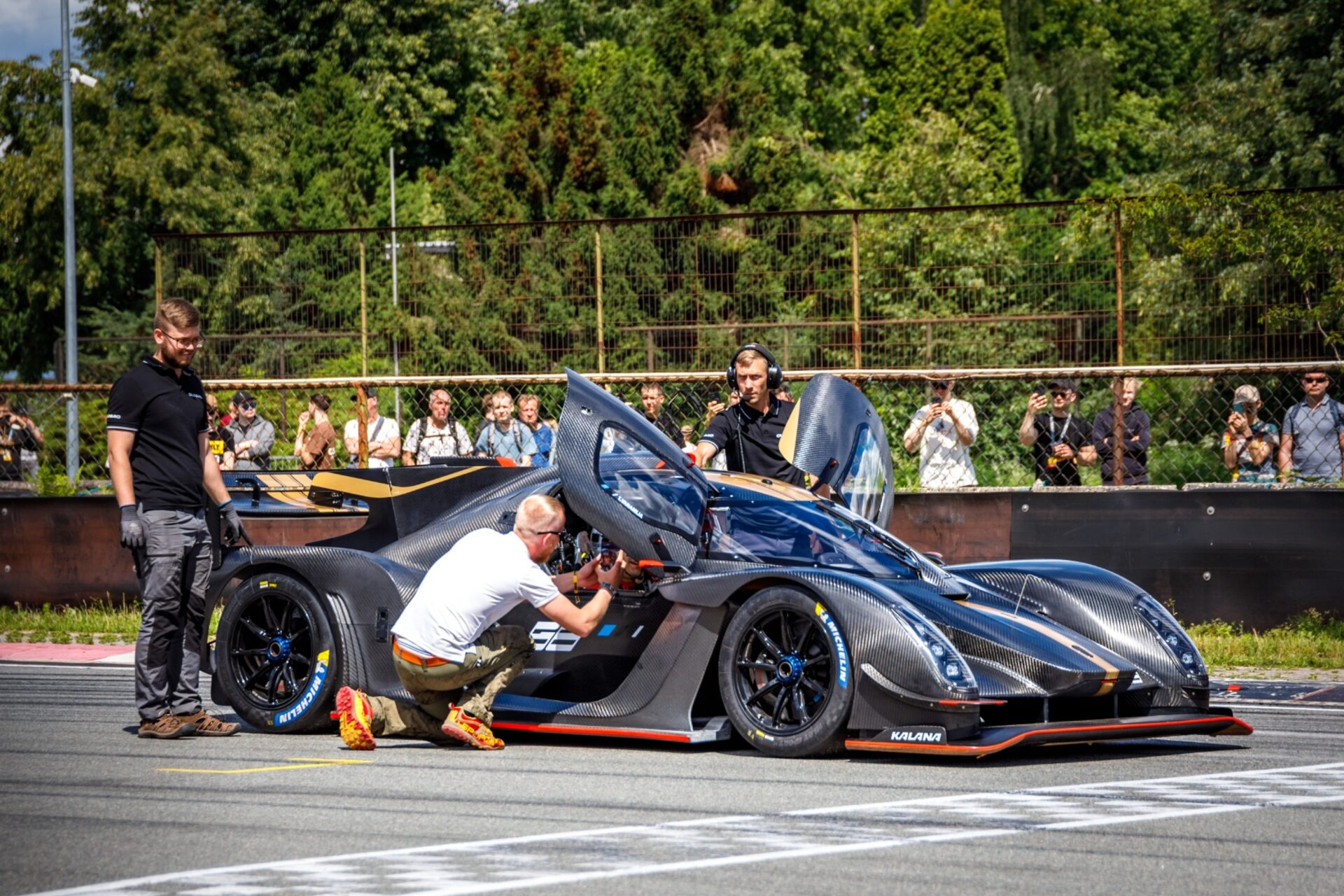
Back in the pitlane.
What Bikernieki Proved
The Steer-Bump geometry works. It is a measurable advantage in slow and medium-speed corners. But the power steering integration needs to be more robust before the mountain. Pikes Peak is rougher than Bikernieki. The altitude thins the air that cools the power steering motor. The corners are tighter and the bumps are worse.
The record stands. The engineering problem it exposed is now part of the development list for the Pikes Peak car.